
The solar mounting systems industry trends for 2026 reveal a market undergoing structural transformation—from commodity steel fabrication to engineered, certified systems with integrated electronics. The global market reached $15.49 billion in 2025 and is projected to hit $31.43 billion by 2032, growing at 10.62% CAGR . This solar mounting systems industry trends analysis examines the forces reshaping production, technology, and regional demand.
Market Scale and Growth Drivers
The solar mounting systems industry trends reflect broader solar adoption. In 2025, global production reached approximately 94 million units with 110 million units of annual capacity. Gross profit margins average 38%, indicating healthy value capture for manufacturers with engineering capabilities .
Growth is driven by three converging forces. First, utility-scale solar additions continue accelerating, with single-axis tracker demand pushing racking complexity higher . Second, distributed generation expansion in commercial and industrial segments requires modular, pre-assembled systems that reduce installation labor . Third, agrivoltaic and dual-use projects are creating demand for elevated structures that allow farming underneath, a segment now representing approximately 10% of pole-mounted racking demand .
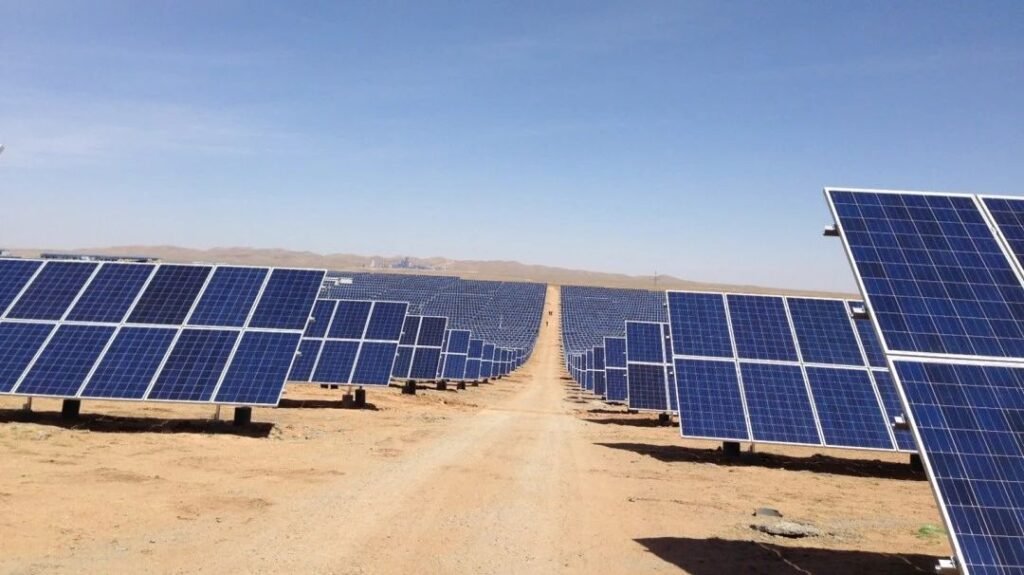
Technology Transformation: From Steel to Systems
The most significant solar mounting systems industry trends is the shift from component supply to certified system integration. UL 2703 has become the industry benchmark, requiring manufacturers to validate structural strength, grounding paths, and bonding as complete assemblies .
Large-Format Module Adaptation is forcing racking redesign. Modules exceeding 2 meters create higher wind uplift forces and mechanical stress on clamps. Traditional corner clamping exacerbates these issues. Leading manufacturers now leverage Bessel points—optimal support locations that minimize bending—and add third rails for load distribution .
Integrated Electronics represent another frontier. UL 3741 certifies racking systems that achieve rapid shutdown without module-level power electronics, reducing component count and failure points .
Regional Market Dynamics
Asia-Pacific dominates manufacturing. Chinese producers like Xiamen Kseng Metal Tech operate 12GW annual capacity across five production lines covering aluminum racking, tile roof hooks, trackers, and ground screws. Kseng has shipped nearly 25GW of racking by end-2025 and holds the No.1 market share in Japan and Korea for aluminum solar mounting .
North America remains the largest consumption market, driven by utility-scale and commercial projects. Nextracker and Array Technologies lead the tracker segment, while Clenergy and Schletter serve distributed generation .
Europe prioritizes certification and sustainability. UL 2703A adoption for waterproofing is gaining traction, particularly in markets with strict building codes .
Tracker Adoption and Single-Axis Growth
The solar mounting systems industry trends show single-axis trackers gaining share in utility-scale projects. Trackers add €0.06–€0.10/Wp over fixed-tilt but deliver 15–25% energy yield gains in high-DNI regions . By 2035, ground-mount racking systems are expected to reach 255 index points on single-axis tracker adoption .
Challenges and Risk Factors
Supply chain volatility remains a persistent risk. Steel and aluminum prices fluctuate, and shipping costs for oversized racking components can reach 2–3x standard container rates .
Regulatory fragmentation across jurisdictions complicates certification. UL 2703 is accepted in North America, but European markets require CE marking and local fire performance documentation .
Quality inconsistency among low-cost producers poses reputational risks. Buyers increasingly demand material certificates and named-lab test reports before committing to orders .
Future Outlook: 2026–2032
The solar mounting systems industry trends point toward continued expansion. Key developments to monitor:
Pre-assembled and modular designs will reduce field labor in high-cost markets, particularly for commercial ground-mount projects .
Bifacial compatibility will become standard, requiring open geometries and elevated rails that maximize rear-side light capture. Field data shows gains up to 19.24% with optimized mounting .
Domestic manufacturing will expand in North America and Europe to reduce logistics costs and tariff exposure .
FAQ
1. How large is the solar mounting systems market?
The global market reached $15.49 billion in 2025 and is projected to reach $31.43 billion by 2032, growing at 10.62% CAGR .
2. What are the key technology trends in solar mounting?
Large-format module adaptation using Bessel points and third rails, UL 2703 system certification, integrated grounding, and UL 3741 rapid shutdown compliance .
3. Which regions offer the best manufacturing capabilities?
Asia-Pacific dominates production, particularly China. Xiamen Kseng operates 12GW capacity and has shipped nearly 25GW of racking globally .
4. What are the main challenges for the industry?
Supply chain volatility, regulatory fragmentation across markets, and quality inconsistency among low-cost producers .
5. How much do trackers add to mounting costs?
Single-axis trackers add approximately €0.06–€0.10/Wp over fixed-tilt systems but deliver 15–25% energy yield gains in high-DNI regions
For partnership inquiries and product information, contact manager@ruhaimaterial.com or explore https://ruhaimaterial.com/products/.