
Selecting the right solar mounting systems buyer’s guide framework is the foundation of any successful PV project. Solar mounting systems account for roughly 15–20% of total system costs, yet they determine whether your array survives 25 years of wind, snow, and thermal cycling. In 2025, global production of these systems reached approximately 94 million units, with an average price of around $150 per unit . This solar mounting systems buyer‘s guide breaks down the essential specifications, material choices, and supplier evaluation criteria that separate audit-grade racking from field-failure risks.
Racking System Types: Match the Mount to the Application
Every solar mounting systems buyer’s guide must begin with application matching. The three primary families differ dramatically in cost structure and load capacity .
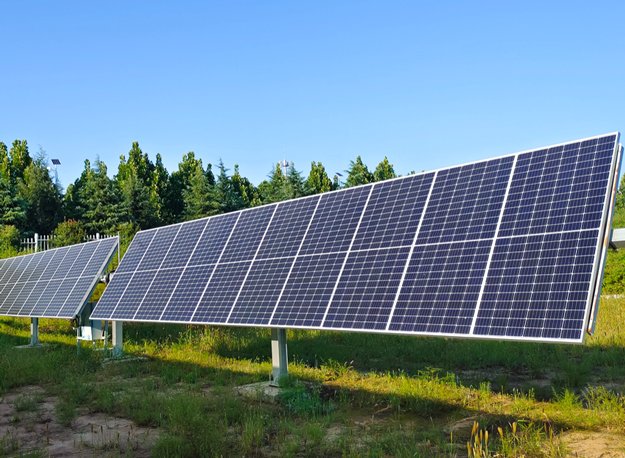
Ground-Mount Systems carry the highest certified load ceiling because pile embedment is an engineered variable. Deeper piles or wider footings raise the rating without changing the rack profile. These systems dominate larger arrays where per-panel foundation costs amortize down . Installation costs range from €0.12–€0.20/Wp for driven pile systems .
Roof-Attached Rail Systems are the default for arrays of two or more panels on structural roofs. Ballasted systems on flat commercial roofs trade lower wind ratings for zero penetrations—critical when roof warranties prohibit new holes . Pitched roof rail hardware runs €0.08–€0.15/Wp .
Pole-Mounted Systems suit single panels or small arrays at remote sites. Load capacity depends on pole embedment depth and diameter, so a quote without pole specifications is incomplete .
Material Specifications: Where Cost-Cutting Creates Failure Points
A rigorous solar mounting systems buyer’s guide must address material quality. Aluminum alloy 6005-T5 or 6063-T6 anodized extrusion is the structural default . “Aluminum alloy” without a temper spec is a red flag—budget racks using zinc-aluminum die-cast crack at bend radii under cyclic wind load .
For steel components, hot-dip galvanizing with G90 coating is the standard for ground-mount piles . Coastal installations require thicker Class II anodize (18+ micron) or 316-grade stainless hardware .
Hardware metallurgy is equally critical. SUS304 or AISI 304 stainless steel should be used for bolts, clamps, and grounding hardware. Carbon steel with zinc plating rusts at the bolt head within a season wherever it contacts aluminum—the galvanic pairing is the failure mode, not the coating quality .
Solar Mounting Systems Buyer’s Guide-Load Ratings and Certification: Non-Negotiable for Commercial Projects
IEC 61215 sets a baseline mechanical load test of 2,400 Pa (about 50 PSF), with high-wind-rated assemblies tested to 5,400 Pa (about 112 PSF) . Ask for test reports from named laboratories, not self-declared numbers.
UL 2703 is the critical certification for commercial and permitted installations. It covers the rack’s structural strength, grounding path, and bonding as a system—not the module in isolation . A UL 2703-listed rack bonds the module frame to the rail electrically, eliminating separate ground wires to every panel . This certification also verifies wind uplift and snow load resistance .
For flat-roof attachments, UL 2703A addresses waterproofing for polymer and butyl-based flashing products. It tests tear strength, UV exposure, thermal cycling, and water penetration to ensure long-term roof protection .
Supplier Evaluation: Eight Specifications That Separate Quality from Risk
Solar Mounting Systems Buyer’s Guide Budget and audit-grade racking spec sheets read nearly identically at the line-item level. These eight criteria reveal the real differences :
| Criterion | What to Verify |
|---|---|
| Material certificate | Production-run temper documentation, not marketing claims |
| Wind/snow test data | Named lab reports meeting IEC 61215 or ASCE 7 |
| Grounding certification | UL 2703 listing for the complete assembly |
| Hardware metallurgy | SUS304 stainless documentation |
| Foundation assumptions | Geotechnical data or structural load allowances |
| Corrosion class | Anodize thickness or galvanizing spec for your climate |
| MOQ and tooling | Standard profiles: 500–2,000 sets without tooling charge |
| Lead time | Production schedule with buffer for shipping |
Installation and Maintenance Considerations
Ground-mounted systems require periodic mowing and vegetation control to prevent weed interference. Install panels with tilt angles of 15°–40° to help snow slide off, keeping at least 50 cm ground clearance in low-snow areas and up to 100 cm in heavy-snow regions .
For ballasted flat-roof systems, verify roof load capacity before installation. Ballast adds 3–6 psf for typical systems, and arrays must be secured according to engineered ballast plans .
FAQ
1. What is the most important specification in a solar mounting systems buyer‘s guide?
UL 2703 certification is the most critical specification. It verifies structural strength, grounding integrity, and fire safety as a complete system—not component-by-component claims .
2. How do I verify wind load ratings before purchase?
Request test reports from named laboratories showing compliance with IEC 61215 (baseline 2,400 Pa) or higher ratings for wind-exposed sites (5,400 Pa for high-wind assemblies) .
3. What foundation types are available for ground-mounted systems?
Common options include driven piles, helical piles, ground screws, and concrete ballast. Selection depends on soil conditions and frost depth. Helical foundations suit soft soils; ground screws handle glacial till and hardpan .
4. How much do solar mounting systems cost in 2026?
Hardware costs range from €0.08–€0.15/Wp for pitched roof rail to €0.12–€0.20/Wp for ground-mount driven pile systems. Trackers add €0.06–€0.10/Wp over fixed-tilt .
5. What maintenance do mounting systems require?
Annual inspection of fasteners, grounding connections, and corrosion points. For ground mounts, vegetation control prevents shading and moisture retention
6. How to get a quotation?
manager@ruhaimaterial.com / https://ruhaimaterial.com/contact-us/