
Author: Rhmaterial – Premium Metal Materials & Prefab Solutions for Global Builders
The expandable vs folding container house question comes up in almost every serious inquiry, because both types collapse for shipping — and that is where the similarity ends. One type prioritizes maximum living space from a single delivery. The other prioritizes speed of relocation and lowest transport cost per move. Choosing between them is really a question about how you will use the building.
We build both, so this comparison comes from the production line rather than a brochure. Here is how the two formats actually differ in space, shipping, setup, cost and long-term flexibility.
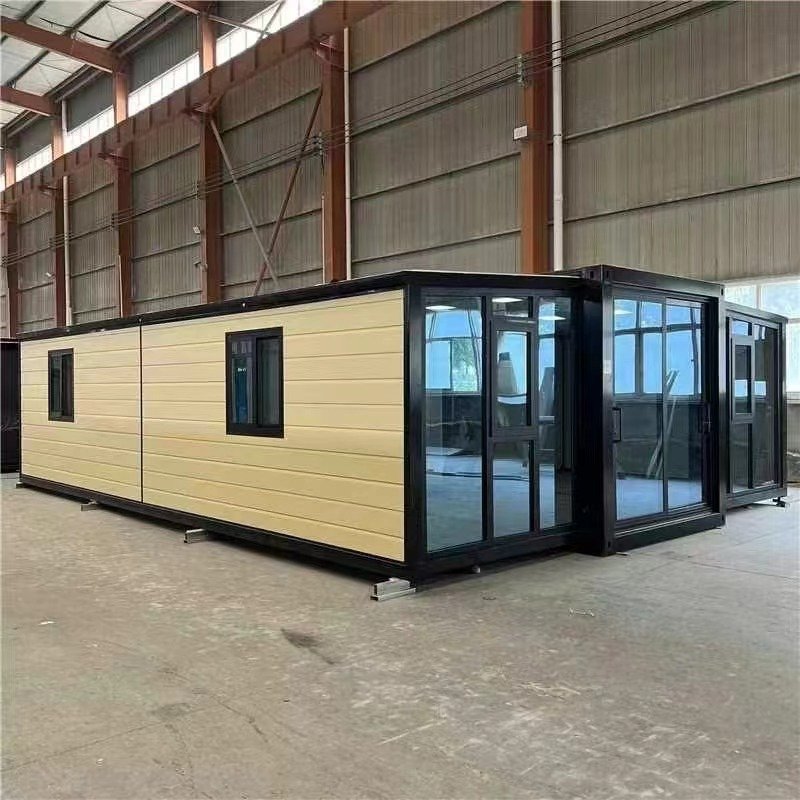
What Each Type Actually Is for Expandable vs Folding Container House
The Expandable Container House
An expandable container house ships as a standard 20ft or 40ft container footprint, then folds out its side wings on site into a full building. A 20ft unit opens to roughly 37㎡; a 40ft opens to about 75㎡. The walls, floor and roof of the wings travel pre-assembled with windows, doors and wiring already installed, so unfolding is a crane operation measured in minutes, not a construction project.
The Folding Container House
A folding container house collapses vertically or horizontally into a flat, stackable package. It is a simpler, lighter structure — typically single-story, 15 to 37㎡ — designed to pack four to six units into one 40ft container and to fold again quickly when the project ends. Folding units trade interior height and heavy structural mass for pure logistics efficiency.
Side-by-Side Comparison(Expandable vs Folding Container House )
| Factor | Expandable container house | Folding container house |
|---|---|---|
| Opened floor area | 37–75㎡ per unit | 15–37㎡ per unit |
| Units per 40ft container | 1 (platform load) | 4–6 stacked flat |
| Setup on site | Crane + 30–60 min unfold | Crane + ~1 hour per unit |
| Re-folding for relocation | Possible, half-day job | Designed for it, hours |
| Structure weight | Heavy welded frame | Lighter bolted frame |
| Typical buyers | Housing, clinics, classrooms | Site camps, temporary offices |
Space: Expandable Wins Decisively
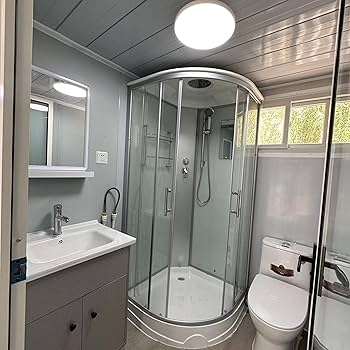
If the building’s job is to be lived in, the expandable format wins on every space metric. One delivery becomes a two-bedroom home with a real bathroom, or four become a classroom block. Folding units top out as comfortable single rooms, and their folded wall thickness consumes a few centimeters of interior dimension on every deployment.
Shipping and Relocation: Folding Fights Back
Where projects move, folding shines. Four to six folding units ride in a single container, so the freight cost per delivered room is dramatically lower — a decisive factor for contractors rotating camps between sites. Refolding takes hours and the units are engineered for dozens of cycles. Expandables can also be refolded and moved, but the operation is heavier, slower and better suited to occasional relocation rather than routine moves.
Cost Per Square Meter
Raw unit prices overlap: folding units run roughly $2,500 to $4,000 while 20ft expandables start around $7,000 — but the expandable delivers twice the area. Per square meter of finished floor, expandables land at $190 to $300 and folding units at $160 to $220 before freight. After freight, the numbers converge: folding’s shipping efficiency versus expandable’s area advantage roughly cancel out, which is why the decision should rest on use case rather than price alone.
Which Should You Buy(Expandable vs Folding Container House )?
Choose expandable container house if…
- People will live in it for years, not months.
- You need bedrooms, a full bathroom and a kitchen from one unit.
- The site has room to unfold and a crane can reach it.
- You want the fastest possible route from delivery to move-in day.
Choose folding container house if…
- The building moves with the project, every few months.
- You need many identical rooms — dormitories, offices, clinics on rotating sites.
- Freight budget dominates the decision, especially long sea routes.
- Single-story footprint is acceptable and interior height is not critical.
Hybrid strategies work too: many operators run folding units for staff housing on temporary sites and place one expandable as the permanent site office or canteen. The two formats complement rather than compete.
Frequently Asked Questions
Can an expandable container house be moved to a new site later?
Yes. Refold, crane onto a platform trailer or into a container, and ship. Plan it as a half-day operation with the same crew size as the original setup, and budget for re-sealing joints at the fold lines on the second deployment.
Are folding container houses durable enough for years of use?
The galvanized steel frames last 15 to 20 years with normal handling. The limiting factor is the fold hardware and gaskets, which wear with every cycle — inspect them each time you refold.
Which type handles cold climates better?
Expandables, marginally. Their heavier frame accepts thicker panel cores and the unfolded envelope has fewer joints. A folding unit with 75mm PU panels still performs well; ask for the thermal-break detail at the fold line in either format.
Still deciding? Describe your project and relocation plans — we manufacture both formats and will recommend the honest answer, not the more expensive one.