
What’s the ground mount solar racking system?
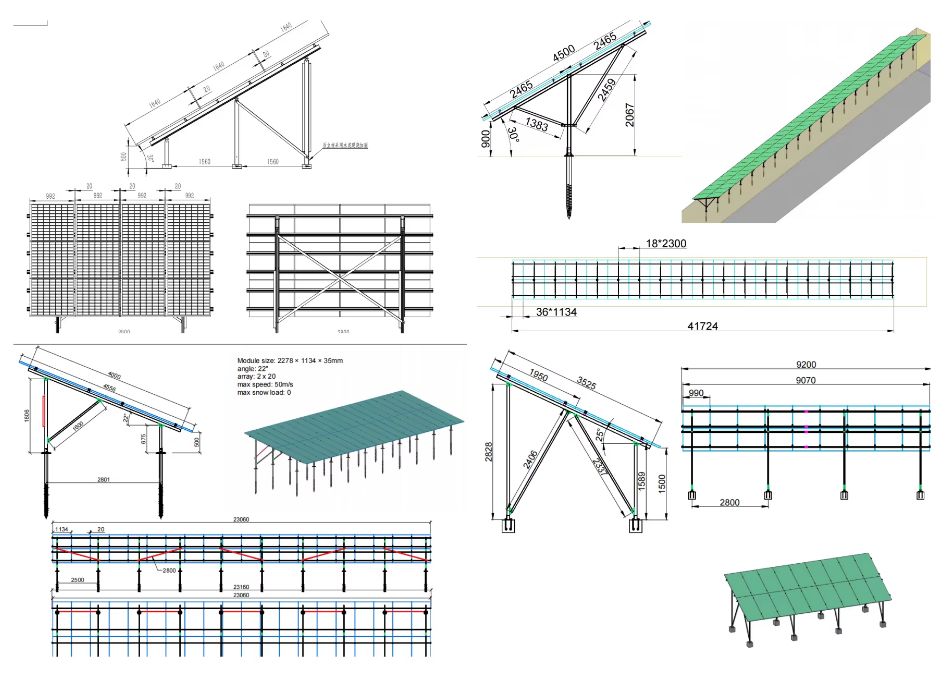
When planning a large-scale solar installation, selecting the right ground mount solar racking systems is one of the most critical decisions you will make. Unlike rooftop arrays, ground mount solar racking systems offer superior flexibility in orientation, tilt angle, and scalability—directly translating to higher energy yields and better long-term ROI. With the U.S. solar market expected to install over 30 GW of utility-scale capacity in 2026 alone, the demand for robust, reliable mounting infrastructure has never been greater. For EPC contractors, project developers, and asset owners, investing in high-quality ground mount solar racking systems ensures structural integrity, operational efficiency, and decades of trouble-free performance. At Ruhai Material, we engineer advanced mounting solutions that meet these exacting industry standards.
Why Choose Ground Mount Solar Racking Systems Over Rooftop Installations?
Ground mount solar racking systems provide several distinct advantages that make them the preferred choice for utility and commercial projects. First, ground-mounted arrays typically produce 10–25% more energy than rooftop systems of the same capacity, simply because they can be oriented at the optimal tilt angle and azimuth for maximum solar exposure. Second, maintenance is significantly easier—panels are accessible without the safety risks and logistical challenges of working at height. Third, ground mounts allow for future expansion without compromising existing roof structures. These benefits make ground mount solar racking systems an ideal solution for greenfield projects, landfills, and large commercial campuses where land availability is not a constraint.
Key Engineering Considerations for Ground Mount Solar Racking Systems
Designing a reliable ground mount solar racking system requires careful attention to several technical factors:
1. Foundation Selection: Driven Piles vs. Ballasted Blocks
The choice of foundation directly impacts project cost, installation speed, and environmental footprint. Driven piles are the most economical option for sites with favorable soil conditions, offering rapid installation and minimal concrete usage. For rocky or contaminated terrain, ballasted ground mount systems using concrete blocks provide a zero-penetration alternative that preserves site integrity. Hybrid approaches, such as helical piles, are also gaining popularity for their versatility.
2. Ground Coverage Ratio (GCR) and Row Spacing
To prevent inter-row shading—especially during winter months when the sun is lower—engineers must carefully calculate row spacing based on latitude and array tilt. A typical ground mount solar racking system operates with a GCR of 0.3 to 0.5, balancing land use efficiency against energy loss from shading. Advanced software tools can simulate shading patterns to optimize layout before construction begins.
3. Wind Load and Snow Load Resistance
Ground mount solar racking systems must withstand extreme environmental forces. In hurricane-prone regions, systems are designed for wind speeds exceeding 150 mph, using reinforced posts and heavier gauge steel. Similarly, in northern climates, snow loads of 50 psf or more require robust structural framing. Our systems at Ruhai Material undergo rigorous finite element analysis (FEA) to ensure compliance with ASCE 7-22 standards.
4. Tilt Angle Optimization for Maximum Yield
Fixed-tilt ground mount solar racking systems are typically set at an angle equal to the site latitude, while single-axis trackers can boost annual production by 15–25% by following the sun’s daily path. The choice between fixed and tracking systems depends on electricity pricing, land costs, and project specific goals.
Why Ruhai Material Stands Out in Ground Mount Solar Racking Systems
As a premier supplier of solar mounting infrastructure, Ruhai Material delivers ground mount solar racking systems that combine durability with cost-efficiency. Our product portfolio includes:
- G Base Bracket Systems: Designed for rapid deployment with minimal logistics overhead, adaptable to ballast, gravel, or anchor foundations.
- Galvanized Steel and Aluminum Alloy Options: Ensuring corrosion resistance for 25+ year project lifespans.
- Pre-Assembled Components: Reducing on-site labor and installation time by up to 30%.
- Comprehensive Engineering Support: Including stamped drawings, wind load calculations, and foundation specifications.
Every component is manufactured under strict quality control protocols, with third-party testing to verify structural performance. Whether you are developing a 5 MW community solar farm or a 100 MW utility project, Ruhai Material provides customized ground mount solar racking systems tailored to your site’s specific requirements.
Installation Best Practices for Ground Mount Solar Racking Systems
Successful deployment of ground mount solar racking systems follows a structured workflow:
- Site Assessment: Conduct geotechnical surveys to evaluate soil bearing capacity and identify any underground utilities.
- Foundation Installation: Drive piles or pour concrete footings according to engineered specifications.
- Racking Assembly: Attach support posts and horizontal rails, ensuring proper alignment.
- Module Mounting: Secure solar panels using appropriate clamps and hardware.
- Electrical Integration: Install wiring, combiner boxes, and inverters with proper grounding.
Regular maintenance—including cleaning panels, inspecting fasteners, and checking ground connections—will maximize the lifespan and performance of your ground mount solar racking systems.
Frequently Asked Questions (FAQ)
1. What are the primary advantages of ground mount solar racking systems over rooftop systems?
Ground mount solar racking systems offer higher energy production (10–25% more), easier maintenance access, no roof penetration risks, and greater scalability for future expansion. They are ideal for sites with available land and projects requiring optimal panel orientation.
2. How much land is required for a ground mount solar racking system?
A typical fixed-tilt ground mount solar racking system requires approximately 6–12 m² per kW of installed capacity, depending on row spacing and tilt angle. Single-axis trackers require more land due to increased row spacing for tracking movement.
3. What foundation types are available for ground mount solar racking systems?
Common foundations include driven steel piles, concrete piers, ballasted blocks, and helical piles. The selection depends on soil conditions, wind loads, environmental regulations, and budget constraints.
4. How do ground mount solar racking systems perform in extreme weather?
High-quality ground mount solar racking systems are engineered to withstand wind speeds of 150+ mph and snow loads of 50+ psf. Systems should be certified to ASCE 7-22 or equivalent local building codes.
5. Can ground mount solar racking systems be installed on uneven terrain?
Yes, adjustable post heights and terrain-following designs allow ground mount solar racking systems to adapt to slopes and undulating ground conditions. Custom engineering is recommended for challenging sites.
6. What is the typical lifespan of a ground mount solar racking system?
With proper design and corrosion protection (e.g., hot-dip galvanization or anodized aluminum), ground mount solar racking systems are built to last 25–30 years, matching the warranted lifespan of solar panels.