
The expandable house industry is experiencing unprecedented growth as demand for flexible, cost-effective housing solutions accelerates worldwide. According to recent market analysis, the global foldable houses market is undergoing strong expansion, driven by factors ranging from geopolitical conflicts to changing consumer preferences and regulatory shifts . For developers, investors, and housing professionals, understanding the expandable house industry landscape is essential for capitalizing on emerging opportunities. This guide examines the key trends, market dynamics, and strategic considerations shaping the expandable house industry in 2026 and beyond.
The Rise of Expandable Housing Solutions
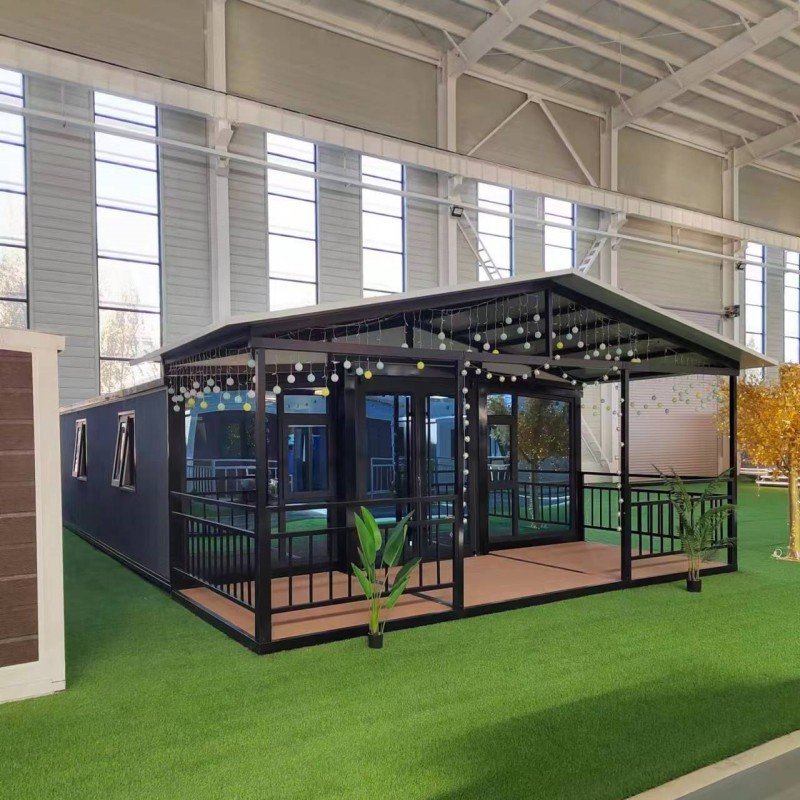
Expandable houses—also known as foldable or telescopic homes—represent a paradigm shift in how the construction industry approaches rapid deployment housing. Unlike traditional prefabricated structures that arrive as panels requiring extensive on-site assembly, expandable homes ship in compact configurations and unfold into fully functional living spaces, often within hours .
The expandable house industry has attracted significant attention from both established construction companies and innovative startups. Major players now include manufacturers from China, Europe, and North America, with product portfolios spanning single-section compact units to multi-section connectable structures . This competitive landscape is driving rapid innovation in materials, structural engineering, and smart home integration.
Key Market Drivers Shaping the Expandable House Industry
1. Global Housing Shortages and Affordability Crisis
Housing affordability has reached crisis levels in many developed economies. The expandable house industry directly addresses this challenge by offering a lower-cost alternative to traditional construction. Factory-based production eliminates many on-site labor costs, while compact shipping configurations reduce logistics expenses. For buyers outside China, freight costs become manageable when ordering in pairs, as two 20ft units fit inside a single 40HQ shipping container .
2. Disaster Relief and Emergency Housing Demand
Natural disasters and humanitarian crises continue to create urgent demand for rapidly deployable shelter. The expandable house industry has responded with products specifically engineered for emergency applications. These units ship in folded states, can be deployed without heavy equipment or specialized contractors, and offer immediate habitability with pre-installed electrical and plumbing systems .
3. Sustainable Construction and Circular Economy
Environmental regulations are increasingly favoring prefabricated, relocatable structures. Expandable houses can be relocated and reused multiple times without generating significant construction waste, aligning with green building principles and circular economy objectives . The expandable house industry is positioning itself as a sustainable alternative to conventional stick-built construction.
Competitive Landscape and Key Players
The expandable house industry features a diverse ecosystem of manufacturers, distributors, and technology providers. Leading Chinese manufacturers include Henan K-Home Steel Structure, Hebei Weizhengheng Modular House, and Guangzhou Moneybox Steel Structure Engineering, among others . International players such as Boxabl and MODS International are also competing in this rapidly evolving market.
For B2B buyers and distributors, the expandable house industry offers multiple entry points. Some manufacturers specialize in volume production for resort projects, while others focus on customizable solutions for individual buyers. Key differentiators include structural certification (such as ANSI A119.5 for the US market), warranty terms, and post-sale support infrastructure .
Technology and Innovation Trends
Structural Engineering Advances
Modern expandable houses employ sophisticated telescoping mechanisms, folding wall systems, and retractable roof panels . These engineering innovations enable dramatic space expansion—a folded unit measuring 2.2 meters wide can expand to over 6 meters, tripling usable floor area . The expandable house industry continues to invest in lightweight steel frames (typically Q235B grade) and high-performance insulation materials to improve structural integrity and thermal efficiency .
Smart Home Integration
Contemporary expandable houses increasingly incorporate smart home technologies as standard features. Pre-wired electrical systems, app-controlled lighting and HVAC, and integrated security systems are becoming expected rather than optional. This trend is particularly strong in the glamping and short-term rental segments, where guest experience drives purchasing decisions .
Material Innovation
Insulation technology has advanced significantly. Manufacturers now offer EPS, PU, rock wool, and PIR panel options with customizable thicknesses for different climate zones . For cold regions, graphene underfloor heating systems are emerging as premium upgrades. These material innovations are expanding the geographic applicability of the expandable house industry.
Regional Market Analysis
Asia-Pacific: Manufacturing Hub and Growth Market
China dominates global expandable house production, with manufacturing clusters in Shandong, Guangdong, and Hebei provinces . Domestic demand is also growing, driven by tourism development and rural housing initiatives. Southeast Asian markets represent significant opportunities for regional distribution.
North America: Regulatory Compliance and Market Entry
The US and Canadian markets present both opportunities and challenges for the expandable house industry. ANSI A119.5 certification is essential for manufactured housing compliance. Some manufacturers have achieved this certification, enabling direct market entry, while others rely on local partners for compliance adaptation .
Europe: Sustainability-Driven Demand
European buyers prioritize energy efficiency and environmental certifications. The expandable house industry in Europe is responding with enhanced insulation options, renewable energy integration, and documentation supporting circular economy claims .
Challenges and Risk Factors
The expandable house industry faces several headwinds. Shipping costs remain a significant barrier, particularly for capsule-style products that require flat-rack transport at two to three times standard container rates . Regulatory fragmentation across jurisdictions creates compliance complexity. Quality inconsistency among manufacturers—particularly regarding waterproofing and structural assembly—poses reputational risks for the entire industry.
Future Outlook
The expandable house industry is poised for continued expansion. Market forecasts project sustained growth through 2034, driven by housing demand, technological maturation, and increasing regulatory acceptance . As manufacturing scales and logistics networks mature, expandable houses are transitioning from niche solutions to mainstream housing options.
FAQ
1. What is the expandable house industry?
The expandable house industry encompasses manufacturers, suppliers, and distributors of prefabricated housing units that ship in compact configurations and expand into full living spaces on-site. Products range from single-section units to multi-section homes.
2. How large is the expandable house market?
Market research indicates strong growth trajectory, with the broader foldable houses market experiencing expansion driven by housing demand, disaster relief needs, and sustainability trends .
3. Who are the leading expandable house manufacturers?
Major manufacturers include Chinese companies such as Henan K-Home Steel Structure, Hebei Weizhengheng Modular House, and Guangzhou Moneybox Steel Structure Engineering, alongside international players like Boxabl and MODS International .
4. What trends are shaping the expandable house industry?
Key trends include smart home integration, material innovation for climate adaptability, sustainable construction practices, and expanding regulatory acceptance across markets.
5. What are the main challenges for the expandable house industry?
Challenges include shipping cost barriers (particularly for oversized units), regulatory fragmentation, quality consistency among manufacturers, and market education for potential buyers
Welcome to know more about RHmaterial(manager@ruhaimaterial.com/https://ruhaimaterial.com/).