
A container house for Airbnb is one of the few property plays where the math still works for small investors: a distinctive, fully finished guest unit delivered for the price of a bathroom renovation, earning nightly rates that rival hotel suites. The tourism market has noticed — boxy glass-fronted cabins now dominate “most wish-listed” feeds in scenic regions worldwide.
This guide runs the actual business: what the unit costs, what it earns, which design decisions drive five-star reviews, and how to launch without the classic first-year mistakes. The numbers assume a single-unit start, because that is how most successful operators begin.
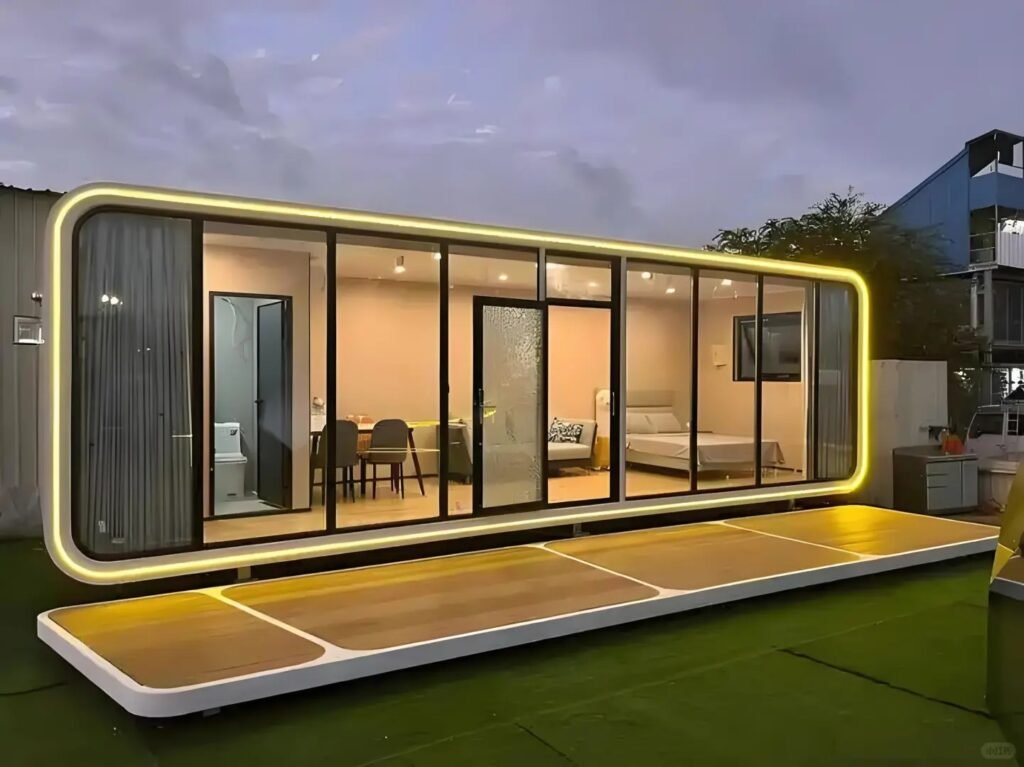
Why Container House for Airbnb Work as Short-Term Rentals?
Guests book photos, and modern prefab units photograph beautifully: floor-to-ceiling glazing, clean panel lines, designer interiors. Beyond aesthetics, the economics stack up on four fronts:
- Speed: a delivered unit is listing-ready in weeks, not the year a site build takes.
- Capital efficiency: $25,000 to $40,000 all-in versus six figures for a site-built cabin.
- Scalability: the second and third units repeat the proven first one.
- Relocation: if regulations or the market shift, the asset moves with the business.
Startup Cost Reality-Container House for Airbnb
| Item | Typical Range |
|---|---|
| Guest-grade 37–40㎡ unit delivered (pod or expandable) | $25,000–$40,000 |
| Site works, foundation, utilities | $3,000–$8,000 |
| Furnishing and styling package | $3,000–$6,000 |
| Professional photography and listing setup | $300–$800 |
| Total to first booking | $31,000–$55,000 |
Pod-style units such as the Apple Cabin hotel suite sit at the premium end with hotel-grade interiors, while expandable formats deliver equivalent floor area for less and trade some of the designer glass for a lower entry ticket. Both photograph well enough to earn top-of-search placement.
The ROI of Container House for Airbnb Math That Matters
Take a realistic mid-scenario for a scenic-region unit: an average daily rate of $130, 62 percent occupancy (about 226 nights a year), a 3 percent platform fee and 18 percent operating costs for cleaning, utilities, consumables and maintenance. That yields roughly $23,400 gross annual revenue and about $18,400 net before financing and local taxes.
Against a $38,000 all-in investment, payback lands at just over two years. Strong operators — prime siting, five-star reviews, direct-booking repeat guests — compress that to 18 months. Weak ones stretch it past four. The variables you control are siting, design and review velocity, in that order.
Design Decisions That Drive Reviews
1. Bathrooms Get Reviewed, Living Rooms Get Booked
Guests forgive a simple kitchen and never forgive a bad bathroom. Specify a proper shower cabin, real ventilation and instant hot water — the standard package in our expandable units includes exactly this and it is the most review-relevant spec in the building.
2. Glazing Is the Product Photo
One panoramic window wall converts the listing thumbnail into a booking. In tourism settings, capsule and pod designs like the space capsule glamping unit exist precisely because guests pay premiums for the view-from-bed experience.
3. Insulation Decides Summer and Winter Revenue
A unit that turns into a greenhouse in July or an icebox in January loses its peak seasons. Specify panel cores to your climate — 75mm to 100mm PU for hot summers or real winters — and add a split AC as standard. Year-round comfort is year-round occupancy.
4. Outdoor Space Doubles the Perceived Size
A deck, fire pit and outdoor shower add more review value per dollar than anything indoors. Budget $2,000 to $4,000 for exterior living space and photograph it at dusk.
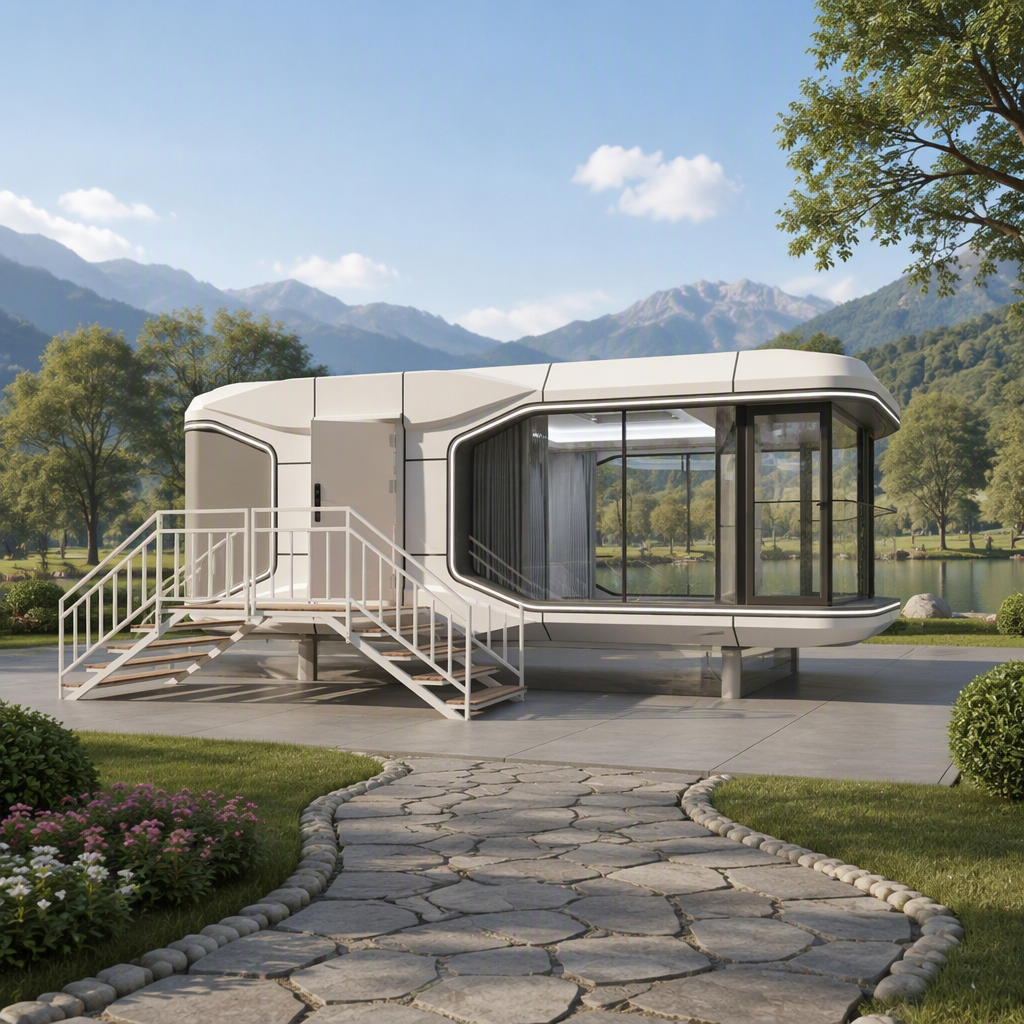
Siting and Rules: Where Container House for Airbnb Projects Fail
The unit is mobile; the permit is not. Before ordering, confirm that short-term rentals are allowed on your parcel, whether a tourism or rental registration applies, and what septic or sewer capacity the site legally has. The platform’s own regulatory guidance plus one call to your local planning office answers 90 percent of it. Utilities come next: reliable power, water and 4G/5G are non-negotiable for guest satisfaction scores.
Launch Checklist
- Verify short-term rental rules and utility capacity on your parcel.
- Order the unit with climate-matched insulation and the bathroom package.
- Complete site works before delivery day so the crane has access.
- Furnish, style and deep-clean before photography.
- Shoot photos at golden hour, then list with a 4-week intro price.
- Collect ten five-star reviews before raising rates to market level.
Frequently Asked Questions
Which container house type earns the highest nightly rate?
Designer pods and capsule units, consistently — the glass-forward aesthetic photographs best and justifies 20 to 40 percent rate premiums over plain expandable units of the same size. The premium narrows in markets where guests book on price alone.
Is one unit enough to start?
Yes, and it is the recommended start. One unit proves the market and the operating routine; scale to three to five units once review velocity and occupancy confirm demand. Multi-unit orders also cut freight per unit significantly.
What maintenance does an Container House for Airbnb Project need?
Budget one to two percent of unit value annually: sealant checks at panel joints, HVAC service, exterior touch-up paint and plumbing descaling in hard-water regions. Between-guest maintenance is the same as any rental.
Ready to run the numbers on a specific location? Tell us your region and nightly-rate expectations — we will recommend the unit and specification that fits the business case for your container house for Airbnb.