
The capsule house industry has emerged as a high-growth segment within the broader prefabricated housing market, capturing attention from hospitality investors, glamping operators, and tourism developers worldwide. These futuristic-looking structures—characterized by curved profiles, panoramic windows, and space-age aesthetics—offer compelling visual impact that translates directly into rental premiums. This capsule house industry guide examines market dynamics, key players, investment considerations, and strategic factors for success in this rapidly evolving sector.
What Defines the Capsule House Industry
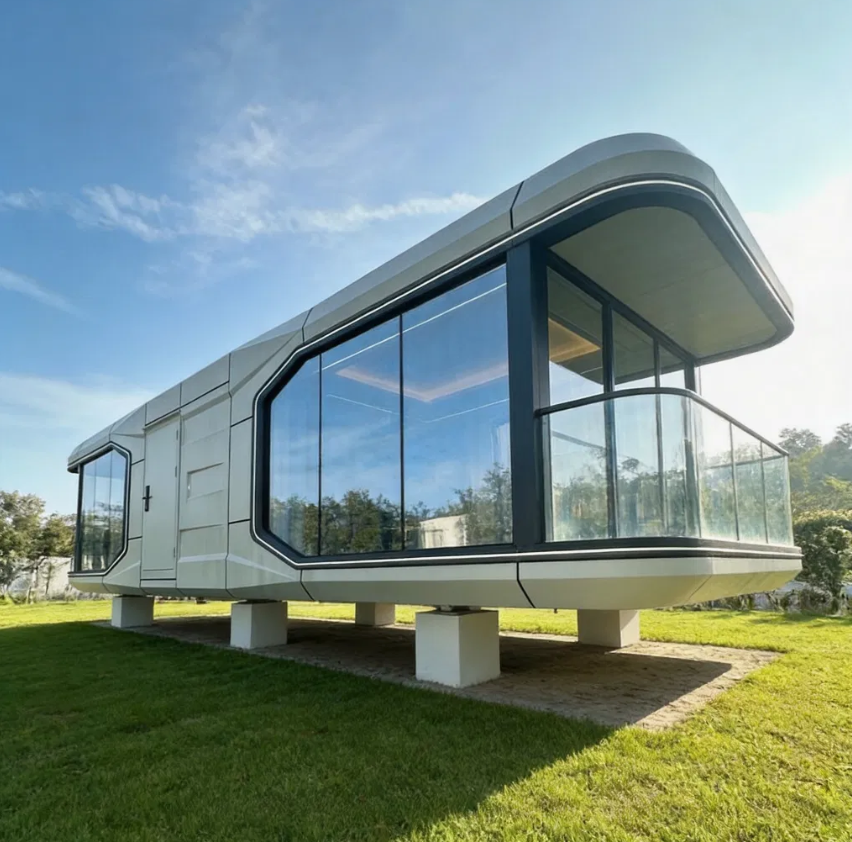
The capsule house industry encompasses manufacturers and suppliers of compact, prefabricated dwelling units inspired by space capsule design principles. Unlike traditional container homes or expandable structures, capsule houses feature distinctive architectural characteristics: rounded or domed exteriors, large glazing elements, and integrated smart home technology as standard .
These units serve multiple applications within the hospitality and residential sectors. Glamping resorts deploy capsule houses as premium guest accommodations, leveraging their photogenic design for social media marketing. Individual buyers use them as backyard studios, guest houses, or off-grid retreats. The capsule house industry has also expanded into office pods and wellness spaces.
Market Growth and Investment Potential
The broader smart micro homes market—which includes capsule houses—is projected to experience sustained growth through 2034, driven by urbanization, housing affordability challenges, and the experience economy . For hospitality investors, capsule houses offer a compelling investment thesis: typically 100-400 square feet in size, they command nightly rates comparable to boutique hotel rooms while requiring significantly lower capital investment than traditional construction.
Payback period analysis suggests 3-5 years is reasonable for well-located glamping projects, depending on local market rates and occupancy levels . This capsule house industry overview emphasizes that location selection and market positioning are critical success factors—capsule houses perform best in destinations with strong tourism demand and limited premium accommodation supply.
Key Players and Manufacturing Landscape
The capsule house industry is dominated by Chinese manufacturers, with several established players and emerging competitors. Luban Cabin (Shandong) ranks among the largest capsule-focused manufacturers in China, featured on CCTV and specializing in volume production for resort and hotel projects . Volferda (Foshan) focuses on glamping applications, offering capsule and dome designs for Southeast Asian and Middle Eastern markets .
Magic Box Tiny House (Yantai) differentiates through product diversity—offering capsule pods, traditional tiny houses, and expandable homes from a single production line, which simplifies logistics for multi-unit projects requiring product variety . The capsule house industry also includes European and US-based manufacturers, though Chinese producers dominate on price competitiveness and production scale.
Design and Technology Trends
Architectural Aesthetics
Capsule houses are defined by their distinctive visual language: rounded shapes, exposed wood interiors, and expansive panoramic windows . This design approach creates strong emotional appeal and photographic value—critical for hospitality applications where social media visibility drives bookings. The capsule house industry increasingly treats design as a primary competitive differentiator rather than an afterthought.
Smart Home Integration
Modern capsule houses typically ship with integrated smart home systems including app-controlled lighting, automated curtains, climate control, and security monitoring . Floor heating systems and skylights are common premium features. This technology integration positions capsule houses as turnkey hospitality solutions requiring minimal setup.
Structural and Material Innovation
Manufacturers employ steel-frame construction with aluminum cladding for durability and weather resistance . Interior finishes prioritize natural materials and warm textures to counterbalance the futuristic exterior. The capsule house industry continues to invest in improving insulation performance for year-round habitability in diverse climates.
Buying Considerations for Capsule House Industry Participants
Shipping and Logistics Constraints
A critical operational consideration for the capsule house industry is transportation. Capsule houses typically exceed standard shipping container dimensions in both height and width, requiring either full-unit flat-rack shipping (one unit per container, freight costs two to three times standard rates) or modular disassembly with on-site reassembly . This logistics challenge significantly impacts delivered costs and should be factored into investment analysis.
Certification and Regulatory Compliance
Certification status varies significantly across manufacturers and markets. A unit without certification is effectively a furniture purchase rather than a housing purchase, affecting insurance coverage and financing eligibility . Buyers in the capsule house industry should verify ANSI A119.5 certification for US markets or equivalent standards for other jurisdictions.
Customization Limitations
Unlike expandable houses, which offer greater layout flexibility, capsule houses typically have limited customization scope. Standard layouts include one-bedroom/one-bathroom and two-bedroom/one-bathroom configurations, with floor areas ranging from 17.92 to 36.8 square meters . The capsule house industry prioritizes production efficiency over bespoke design.
Regional Market Opportunities
North America: Premium Glamping and ADU Applications
The US and Canadian markets offer strong potential for capsule houses in glamping resorts and accessory dwelling unit (ADU) applications. Visual differentiation and rapid deployment appeal to hospitality operators seeking unique guest experiences.
Europe: Sustainability and Design-Forward Markets
European buyers prioritize design quality and environmental performance. The capsule house industry is responding with enhanced insulation, renewable energy compatibility, and documentation supporting circular economy claims .
Asia-Pacific: Manufacturing Base and Growing Domestic Demand
China remains the manufacturing hub, with domestic demand growing for tourism projects and rural revitalization initiatives. Southeast Asian markets represent significant opportunities for regional distribution and project development.
Risk Factors and Mitigation Strategies
The capsule house industry faces several risks requiring careful management. Shipping cost volatility and logistics complexity demand conservative budgeting. Regulatory uncertainty in some markets creates compliance risk. Quality inconsistency among manufacturers—particularly regarding waterproofing and assembly precision—poses reputational risks. Successful investors mitigate these risks through manufacturer due diligence, certified product selection, and conservative financial modeling.
Future Outlook
The capsule house industry is positioned for continued growth as hospitality operators seek differentiated accommodation products and consumers embrace experiential travel. Technological maturation, improving logistics networks, and expanding regulatory acceptance will drive market expansion. Strategic investors who establish early market presence and build operational expertise will capture disproportionate value.
FAQ
1. What is the capsule house industry?
The capsule house industry encompasses manufacturers, suppliers, and hospitality operators deploying compact, space-inspired prefabricated dwelling units. Products feature distinctive curved designs, smart home integration, and rapid deployment capabilities .
2. Who are the leading capsule house manufacturers?
Major manufacturers include Luban Cabin, Volferda, and Magic Box Tiny House from China, along with European and US-based alternatives. Chinese manufacturers dominate on price and production scale .
3. What is the typical investment for a capsule house project?
Capsule house unit prices range from $15,000 to $95,000, with additional costs for shipping, foundation, utilities, and permits. Payback periods of 3-5 years are typical for well-located glamping projects .
4. What are the shipping constraints for capsule houses?
Capsule houses exceed standard container dimensions, requiring flat-rack shipping (one unit per container) or modular disassembly. Freight costs are two to three times standard container rates .
5. What certifications should capsule house buyers verify?
ANSI A119.5 certification for US markets is essential. Buyers should verify certification status before purchase, as uncertified units may face insurance and financing challenges