
Author: Rhmaterial – Premium Metal Materials & Prefab Solutions for Global Builders
The steel decking industry trends for 2026 reveal a market undergoing steady transformation—driven by urbanization, composite flooring demand, and material innovation. The global profiled steel sheet decking market is projected to grow at a compound annual growth rate of 3.1% from 2026 to 2032 . The broader steel composite floor deck market is experiencing substantial growth, fueled by robust construction activity in both residential and commercial sectors worldwide . This steel decking industry trends analysis examines the forces reshaping production, technology, and regional demand.
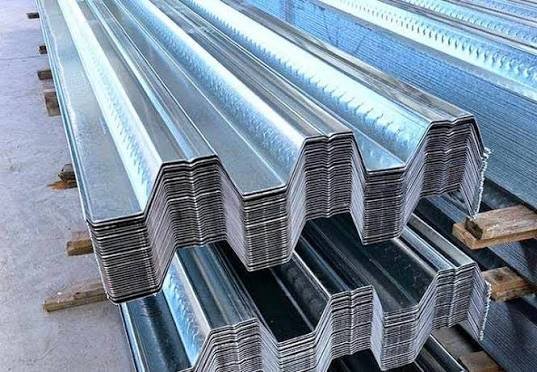
Market Scale and Growth Drivers
The steel decking industry trends reflect broader construction sector dynamics. In 2025, global production reached approximately 8.838 million tonnes with a factory gross profit margin of about 20% . The closed-rib steel decking segment alone reached USD 41.68 billion in market value, projected to grow to USD 53.19 billion by 2032 .
Growth(steel decking industry trends) is driven by three converging forces. First, urbanization and infrastructure development in emerging economies continue accelerating demand for efficient building materials . Second, the inherent advantages of composite decking—faster construction times, reduced structural weight, and excellent load-bearing capacity—make it the preferred choice in modern steel frame building projects . Third, sustainability requirements are driving material innovation toward higher-strength steels that allow thinner gauges without compromising performance .
Technology Transformation: Innovation Reshaping Product Performance
The most significant steel decking industry trends is the shift toward high-performance materials and smart manufacturing.
High-Strength Steel Adoption is accelerating. In 2025, high-strength steel accounted for 65% of closed-rib steel decking production, up 20 percentage points from 2020 . Manufacturers like Tata Steel have developed micro-alloyed steels achieving 550 MPa yield strength for super-high-rise and large-span applications .
Smart Manufacturing is transforming production efficiency. Automated production lines utilizing robotic welding and laser cutting have improved efficiency by 30% while reducing defect rates from 3% to 0.5% . BIM integration allows seamless digital management of design, production, and installation, shortening project cycles by 20% .
Green Technology is becoming a competitive differentiator. Recycled steel content reaching 30% is now available, with short-process electric arc furnace technology reducing carbon emissions by 60% compared to traditional blast furnace methods . These innovations help manufacturers meet ESG requirements and comply with carbon border adjustment mechanisms.
Regional Market Dynamics
Asia-Pacific leads the market, with China accounting for 32% of global closed-rib steel decking consumption and achieving a 4.2% CAGR—higher than the global average . The region benefits from massive urbanization and infrastructure investment, with local manufacturers dominating the mid-to-low-end segment through cost-effective production and localized service .
North America remains the dominant consumption market for composite metal floor decking, driven by mature construction sectors in the United States. The widespread adoption of steel frame construction in commercial and large-scale residential projects creates consistent demand . Strict building codes concerning fire safety and structural integrity favor certified composite deck systems .
Europe prioritizes certification and sustainability. CE marking under EN 1090-1 is mandatory, and manufacturers are focusing on low-carbon production methods and recyclable product designs .
Competitive Landscape
The global steel decking industry trends reveal a moderately concentrated market. The top five players—including Tata Steel, Nucor (Vulcraft), Kingspan, and ArcelorMittal Construction—account for a significant portion of global revenue . These leaders compete on product quality, technical support services, pricing, and the ability to offer integrated solutions for complex steel frame projects .
Beyond global giants, specialized regional manufacturers compete by focusing on niche applications, superior customer service, or specific geographic markets. Companies like O’Donnell Metal Deck (Ireland), ASC Steel Deck (USA), and Marlyn Steel Decks have built strong reputations for expertise and reliability .
Challenges and Risk Factors–Steel Decking Industry Trends
The steel decking industry trends also reveal persistent challenges. Global trade policy uncertainty, including US tariff adjustments in 2025, creates supply chain disruptions and regional economic impacts . Raw material price volatility affects margins and project costing.
Quality inconsistency among low-cost producers poses reputational risks. Buyers increasingly demand material certifications and third-party validation before committing to orders.
Future Outlook
The steel decking industry trends point toward continued expansion. Key developments to monitor:
Material Innovation: Higher-strength steels enabling thinner gauges and lighter structures will reduce material usage and cost while maintaining performance .
Digital Integration: BIM-compatible design tools and IoT-enabled quality monitoring will become standard, improving project efficiency and traceability .
Sustainability Focus: Recycled content, low-carbon production, and design for disassembly will become competitive requirements in green building markets .
For product solutions and partnership inquiries, contact: manager@ruhaimaterial.com or visit https://ruhaimaterial.com/products/ for our product catalog.
FAQ
1. What is the growth rate of the steel decking industry?
The global profiled steel sheet decking market is projected to grow at 3.1% CAGR from 2026 to 2032. The closed-rib segment is expected to reach USD 53.19 billion by 2032, growing at 3.6% CAGR .
2. What are the key steel decking industry trends for 2026?
Major trends include high-strength steel adoption (65% market share), smart manufacturing with 30% efficiency gains, green technology with 60% carbon reduction, and increasing recycled content usage .
3. Which regions offer the best growth opportunities?
Asia-Pacific leads with China accounting for 32% of global consumption. North America remains the dominant market for composite decking, while Southeast Asia and the Middle East show highest growth rates .
4. How is technology changing steel decking production?
Automated production lines, robotic welding, laser cutting, BIM integration, and IoT monitoring are transforming manufacturing. Defect rates have dropped from 3% to 0.5% .
5. What are the main challenges for the steel decking industry?
Trade policy uncertainty, raw material price volatility, quality inconsistency among low-cost producers, and compliance with varying regional certification requirements