
Author: Rhmaterial-Premium Metal Materials & Prefab Solutions for Global Builders
Date:17/Sep,2026
Choosing the right sandwich panel product goes far beyond comparing price per square meter. A complete sandwich panel buying guide must address…Choosing the right sandwich panel product goes far beyond comparing price per square meter. A seemingly identical panel can differ several times over in thermal performance, fire safety, and service life depending on core material type, facing material, thickness specification, and certification level. In 2026, the core logic of a sandwich panel buying guide is clear: define performance requirements first, then match material solutions, and finally verify supplier capability.
For different applications—cold storage, industrial plants, and commercial buildings—this selection framework varies in priority, but the fundamental decision path is universal.According to the American Society of Heating, Refrigerating and Air-Conditioning Engineers (ASHRAE), proper insulation selection can reduce building energy consumption by 30–50% compared to uninsulated enclosures.

Step 1: Lock Core Material Type by Application
The starting point of any sandwich panel buying guide is application analysis…The starting point of any sandwich panel buying guide is application analysis, not product specification comparison. Different scenarios impose fundamentally different requirements on core materials.
Cold Storage and Temperature-Controlled Facilities should prioritize polyurethane (PU/PUR) or polyisocyanurate (PIR) cores. Polyurethane panels deliver R-values of R-7 to R-8 and maintain stable thermal performance across -45°C to +80°C, making them the industry standard for freezer rooms and refrigerated warehouses. PIR cores offer superior high-temperature resistance compared to standard polyurethane, providing advantages in Middle Eastern regions or hot summer climates where roof surface temperatures are elevated.
Industrial Plants and Commercial Buildings require balancing thermal performance, fire rating, and cost. Mineral wool cores, with A1 non-combustible performance and excellent acoustic insulation, have become the mandatory choice for data centers, hospitals, and schools with strict fire safety requirements. For standard warehouses and logistics centers, PIR cores offer a reasonable compromise between fire performance and cost efficiency.
Temporary Buildings and Low-Cost Storage may consider EPS (expanded polystyrene) cores. EPS offers clear price advantages but requires attention to UV sensitivity and lower fire ratings. These panels suit short-lifecycle facilities but are not recommended for permanent buildings with fire safety requirements.
Step 2: Facing Material Selection Logic
The second decision point in a sandwich panel buying guide is facing (skin) material. Steel dominates the industry with a 75.56% market share, offering high structural strength, superior fire performance, and controllable costs—making it the preferred choice for non-residential building applications. For industrial floors and heavy racking areas requiring point load resistance, steel facings provide load-bearing capacity that other materials cannot replace.
Aluminum facings offer advantages in lightweight construction and corrosion resistance, suitable for curtain walls, high-end commercial buildings, and projects sensitive to self-weight. PVDF-coated aluminum facings provide 15+ years of weather resistance, while nano-PVDF coatings add self-cleaning functionality, reducing maintenance costs for high-rise buildings.
Fiber reinforced plastic (FRP) facings hold unique value in food processing and pharmaceutical industries, where non-porous surfaces facilitate cleaning and sanitization, meeting hygienic application requirements.
Step 3: Engineering Calculation of Thickness Specifications
Sandwich panel thickness selection—a critical section in any sandwich panel buying guide—must be based on thermal calculations…Sandwich panel thickness selection must be based on thermal calculations and structural verification, not rules of thumb. The same core material at different thicknesses delivers significantly different thermal performance and spanning capability.
Thickness Reference by Application: Standard warehouses and industrial buildings typically use 50-75mm core thickness; commercial buildings and air-conditioned spaces recommend 75-100mm; cold rooms and temperature-controlled storage require 100-150mm; freezer rooms and deep-freeze environments need 150-200mm.
Structural Span Verification: Sandwich panels are not merely enclosure materials—they are part of the structural system. Thicker cores increase panel stiffness and spanning capability between supporting members. If the design employs wider purlin spacing to save steel, thicker core panels may allow greater spans. However, manufacturer load-span tables must be cross-verified with structural engineer calculations, not relied upon through empirical estimation.
Condensation Risk Control: Sufficient core thickness helps maintain interior surface temperatures above dew point, reducing condensation risk. In high-humidity environments, this factor‘s impact on long-term building performance cannot be overlooked.
Step 4: Fire Certification Verification Points
In any sandwich panel buying guide, fire performance is the area most prone to information asymmetry. Suppliers should be required to provide the following documentation:
| Verification Item | Specific Requirements |
|---|---|
| Core Material | PIR or mineral wool test reports confirming flame retardant rating |
| Fire Test Reports | Fire resistance testing from accredited laboratories |
| Local Code Compliance | Confirmation of compliance with project location building codes |
| Insurance Compliance | Some insurers charge surcharges for combustible core facilities |
European insurance companies frequently refuse coverage or charge significantly higher premiums for food processing plants and similar facilities using combustible cores. This commercial factor often weighs as heavily in purchasing decisions as technical specifications themselves.
The National Fire Protection Association (NFPA) provides comprehensive guidelines for fire-rated building materials, including sandwich panel systems used in commercial and industrial applications.
Step 5: Supplier Capability Assessment
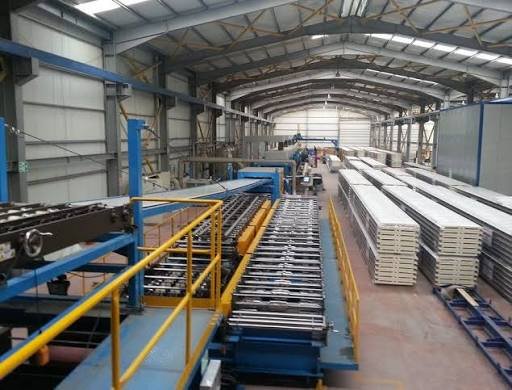
The final step in a sandwich panel buying guide is supplier verification. Key checks should include: degree of production line continuity (continuous line products offer better consistency than batch production), factory certification systems (ISO 9001 is the baseline threshold), and whether load-span tables and thermal performance certificates are provided.
Following this sandwich panel buying guide ensures…One warning sign worth noting: suppliers who quote thickness and price directly without asking about project application and climate conditions. Qualified manufacturers should first understand the project’s U-value requirements, fire rating, structural span, and operating environment before recommending product configurations.
For product solutions and partnership inquiries, contact: manager@ruhaimaterial.com or visit https://ruhaimaterial.com/products/ for our product catalog.
1. What is the most important step in a sandwich panel buying guide?
2. How do I verify core material quality before purchase?