
Metal Materials: Classification, Properties, and Real World Application Cases
A practical guide for procurement professionals, engineers, and project managers on selecting the right metal for every industrial scenario.
Metal materials form the foundational backbone of modern industry, spanning virtually every sector — construction, machinery, hardware, electronics, tooling, shipbuilding, chemicals, and new energy. For procurement professionals, engineers, and project managers, gaining a solid grasp of the basic classification, core properties, and real-world application cases of metal materials not only reduces communication costs but also avoids quality risks, cost waste, and schedule delays caused by incorrect material selection.
1. Basic Classification of Metal Materials
In industry, metal materials are generally divided into two major categories:
- Ferrous metals — based on iron, chromium, and manganese; mainly carbon steel, stainless steel, and alloy steel. Large output, wide application, and outstanding cost-performance ratio.
- Non-ferrous metals — aluminum, copper, titanium, zinc, etc. Offer lightweight construction, high electrical and thermal conductivity, and corrosion resistance for high-end or special working conditions.

2. Ferrous Metals: Properties and Applications
Carbon Steel
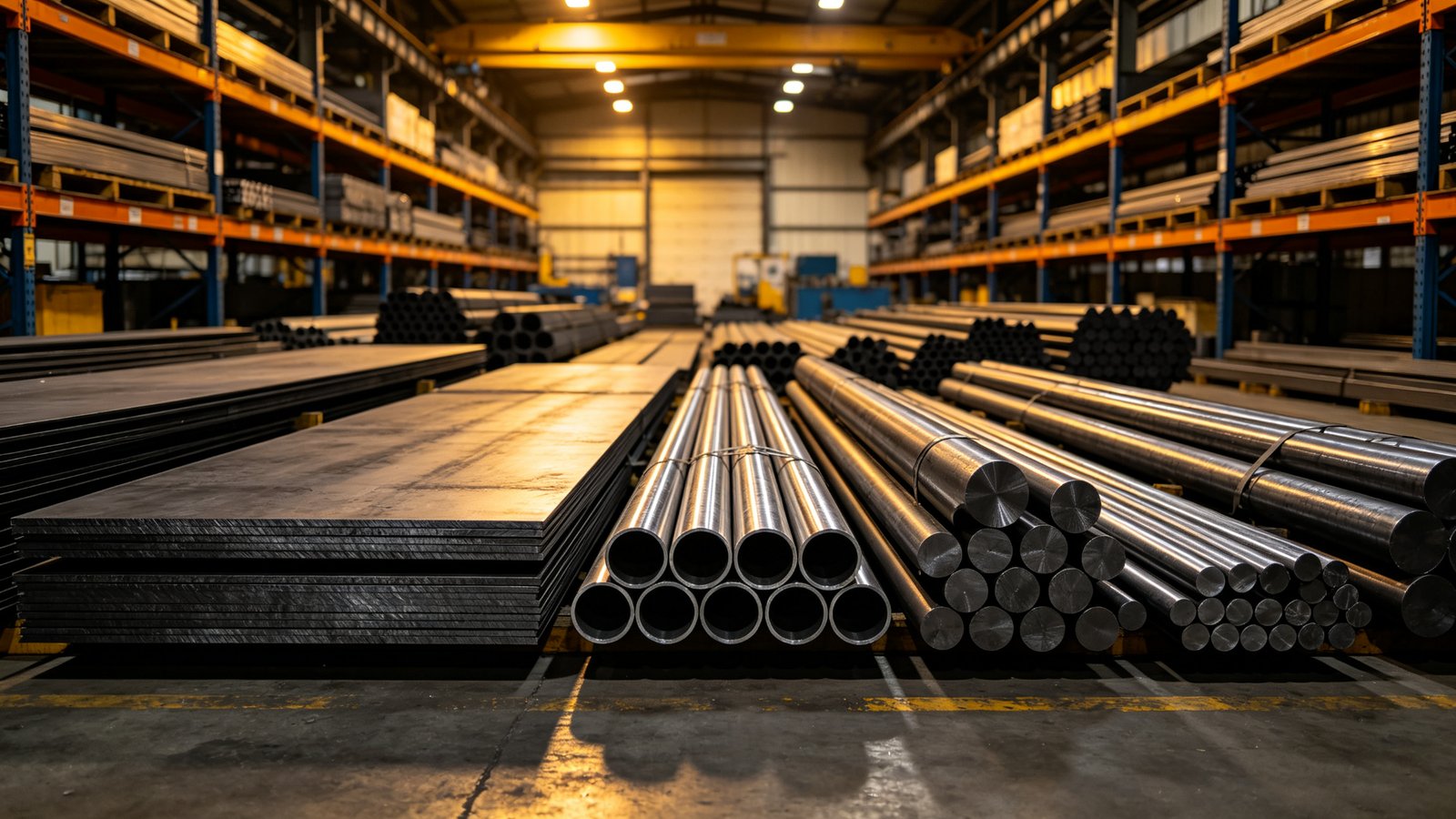
Carbon steel is the most fundamental and widely used structural material. A machinery equipment manufacturer used Q235B carbon steel profiles to fabricate equipment frames and bases. With its excellent weldability and load-bearing capacity, the manufacturer effectively controlled production costs while meeting the structural strength requirements of general-purpose equipment. Carbon steel remains the top choice for industrial frames, supports, bolts, and steel structural components.
Stainless Steel
Stainless steel, thanks to added elements like chromium and nickel, offers exceptional corrosion resistance. Food processing equipment companies extensively use 304 stainless steel sheets to manufacture tanks, pipelines, and worktables — meeting hygiene and safety standards, easy to clean, and rust-free. Chemical enterprises and offshore engineering projects, on the other hand, opt for 316L stainless steel pipes, which withstand acid-alkaline media and salt spray corrosion, ensuring long-term stable equipment operation and significantly extending service life.
Alloy Steel
Alloy steel is mostly used in high-strength, high-wear-resistance, and high-temperature scenarios. Mold factories use 40Cr and 42CrMo alloy structural steels to produce mold bases and mechanical shaft components. Automobile manufacturers use alloy steel plates for chassis and load-bearing parts, maintaining dimensional stability and reliable performance under heavy loads, impact, and high-temperature environments.
3. Non-Ferrous Metals: Properties and Applications
Aluminum Alloys-Metal Materials
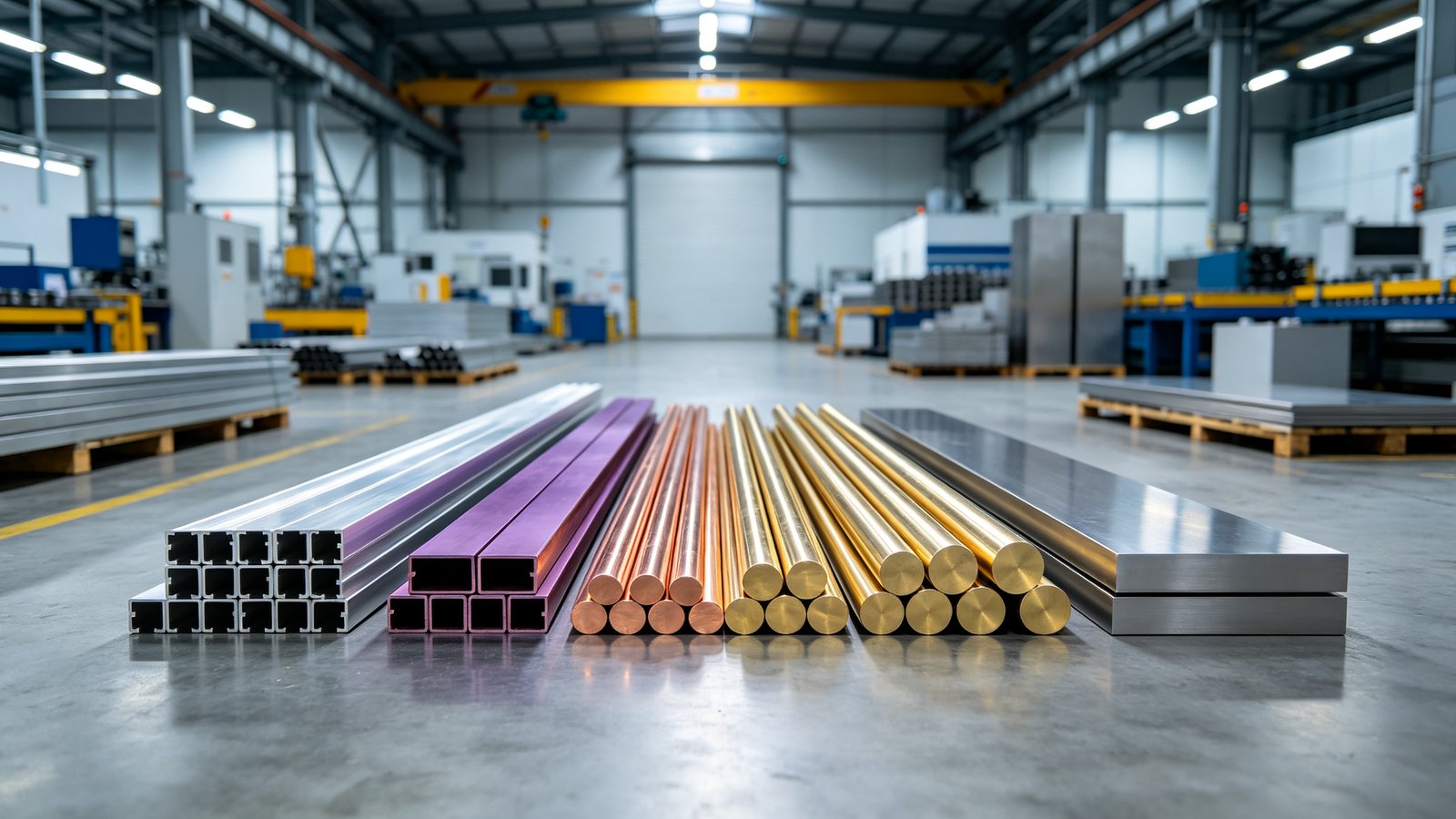
Aluminum alloys are renowned for being lightweight yet strong. New energy vehicle manufacturers use aluminum alloy sheets and profiles to build body frames and battery pack housings, achieving weight reduction to improve driving range. The construction industry widely uses aluminum alloy door and window profiles — weather-resistant, resistant to deformation, and combining aesthetics with durability. Radiators and electronic housings also extensively use aluminum alloys for high heat dissipation efficiency and good machinability.
Copper and Copper Alloys
Copper and copper alloys offer top-tier electrical and thermal conductivity. The power industry heavily uses red copper bars and plates for busbars and terminals — high conductivity with low energy loss. Bathroom hardware, valves, and plumbing fittings commonly use brass bars and plates — easy to machine, corrosion-resistant, and with excellent sealing performance. Heat exchangers and refrigeration equipment use copper coils for superior thermal conductivity.
Titanium Alloys
Titanium alloys feature high strength, low density, and extreme corrosion resistance, and are mostly used in high-end fields. The medical industry uses titanium alloy bars for orthopedic implants — with excellent biocompatibility and no rejection reactions. Offshore engineering and marine equipment use titanium alloy components that withstand long-term seawater corrosion, outperforming stainless steel in durability. The aerospace sector also makes extensive use of titanium alloys to meet the dual demands of weight reduction and high strength.
4. How to Choose the Right Metal Material
Selecting materials should not be based on price alone — suitability for the working conditions matters more:
| Scenario | Recommended Material |
|---|---|
| General structures, normal temp/pressure | Carbon steel |
| Humid, acidic/alkaline, food/pharma | Stainless steel |
| Lightweight, heat dissipation, decorative | Aluminum alloy |
| Electrical/thermal conductivity, valves | Copper alloy |
| Medical, marine, aerospace | Titanium alloy |
5. Common Procurement Pitfalls to Avoid
- Assuming stainless steel never rusts and ignoring environmental differences.
- Comparing only prices without considering tolerances, hardness, or surface quality.
- Lacking clarity on the correspondence between Chinese (GB) and American (ASTM) standards.
- Inconsistency between small-batch trial orders and mass production.
All these issues can be avoided by clearly specifying the grade, standard, dimensions, surface requirements, and inspection reports.
6. FAQ
What is the simplest on-site method to distinguish carbon steel, stainless steel, and aluminum alloy?
A: Carbon steel is medium-weight and prone to rusting; stainless steel is heavier and corrosion-resistant; aluminum alloy is the lightest with low density. A simple weight test by hand can give you a preliminary idea.
What is the most typical application difference between 304 and 316L stainless steel?
A: Choose 304 for ordinary food equipment, interior decoration, and general hardware; choose 316L for chemical, seawater, salt spray, and highly corrosive environments.
In which industries do aluminum alloys have the greatest advantages?
A: New energy vehicles, rail transit, radiators, electronic housings, architectural doors and windows, and photovoltaic mounting systems — scenarios where lightweight construction and weather resistance are priorities.
What key information is needed when procuring metal materials?
A: Material grade, specification and dimensions, quantity, surface requirements, tolerances, whether machining is required, and whether quality certificates and inspection reports are needed.
Can you provide samples and small-batch trial orders?
A: Yes. We support sample testing and small-batch trial orders to help customers verify material properties and dimensions, reducing procurement risk.
Need Expert Material Selection Support?
Ruhai Material supplies stainless steel, carbon steel, aluminum alloy, and copper alloy with custom cutting, bending, drilling, and precision machining.