
Author: Rhmaterial – Premium Metal Materials & Prefab Solutions for Global Builders
The boundaries of container house applications are expanding rapidly. From construction site temporary dormitories to boutique homestays, brand pop-up stores, and creative office spaces, container houses are penetrating more building sectors through modular design, relocatability, and rapid deployment. According to the World Economic Forum‘s 2025 Global Construction Report, modular construction can reduce project timelines by up to 50% and construction waste by 30-40%. In 2026, with rising cultural tourism investment, standardized construction camps, and flexible commercial retail, the logic for selecting container house applications is also evolving. This guide breaks down each scenario’s demand characteristics, configuration points, and investment return logic.
Homestay and Cultural Tourism
Demand Characteristics and Configuration Points
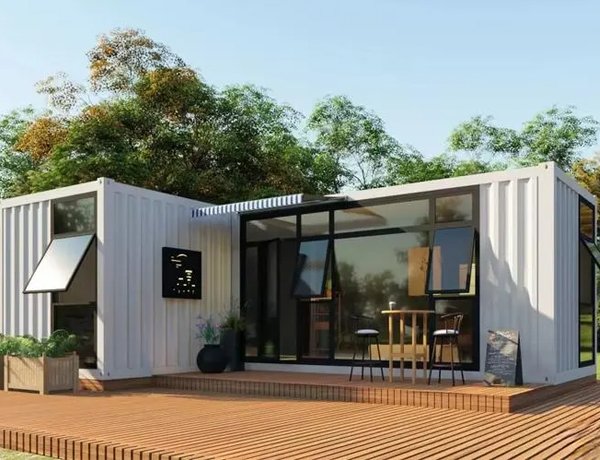
Understanding container house applications requires…The core motivation for homestay owners choosing container house applications is “rapid trial and error” and “visual distinctiveness.” Modular design supports phased investment—deploy 2-3 units for trial operation, then expand after market feedback validation. Configuration points include: exterior color coordination with landscape, large scenic windows, terrace design, and unified interior soft furnishing style.
For special terrains such as mountains, coastlines, and forests, the lightweight nature of container houses reduces foundation dependence, with screw pile foundations adapting to slopes and uneven ground.
Investment Return Logic
Payback periods for homestay scenarios typically run 3-5 years, depending on local room rates and occupancy levels. Container house construction costs are 30%-50% lower than traditional homestay buildings, and support off-season migration to other scenic areas, achieving significantly higher asset utilization than fixed buildings.
Construction Camps and Project Departments
Demand Characteristics and Configuration Points
Container house applications in construction scenarios…Engineering project demand for container house applications centers on “rapid deployment” and “asset reuse.” Standard configurations include: office areas (meeting rooms, document rooms), dormitory areas (4-8 person rooms), canteens, and sanitary modules. Construction scenarios have lower insulation requirements but higher demands for structural durability and relocation convenience.
Foldable units offer clear advantages in construction scenarios—high transport efficiency, easy assembly and disassembly, and full migration to the next site after project completion.
Cost Control Logic
The core of cost control in construction scenarios is “asset reuse rate.” A set of foldable container house units reused across 3-5 projects can reduce per-project amortized costs by 60%-70%.
Commercial Retail and Pop-Up Scenarios
Demand Characteristics and Configuration Points
Container house applications for brand retail…Brand demand for container house applications centers on “flexible deployment” and “brand visual identity.” Pop-up stores, seasonal retail, and exhibition scenarios require spaces supporting rapid disassembly and reuse. Configuration points include: exterior brand signage, interior display systems, checkout areas, and storage space.
Approval pathways for container shops are typically more flexible than fixed buildings, suitable for short-term leased sites and temporary commercial land.
Investment Return Logic
Payback periods for commercial retail scenarios are shorter, typically 6-18 months. Pop-up store scenarios can be leased weekly or monthly, with low per-use costs suitable for brands testing new markets.
Temporary Office and Public Facility Scenarios
Demand Characteristics and Configuration Points
Temporary office scenarios include project command centers, sales offices, and temporary exhibition centers. Configuration requirements exceed construction dormitories, requiring air conditioning, network connectivity, and conference systems. Public facility scenarios include temporary medical points, community service centers, and post-disaster resettlement sites, with higher fire and sanitation standards. Reference the United Nations Human Settlements Programme (UN-Habitat) for guidance on rapid-deployment housing standards in emergency contexts.
Deployment Efficiency Advantages
The deployment efficiency of container houses in temporary office scenarios is a core advantage. From site leveling to office occupancy, foldable units can be completed in 3-5 days; standard units require 1-2 weeks.
Private Residence and Studio Scenarios
Demand Characteristics and Configuration Points
Individual buyer focus on container house applications is “living comfort” and “space utilization efficiency.” Long-term residential needs require high-grade insulation (rock wool or polyurethane), triple-glazed windows, and complete kitchen and bath systems. Studio scenarios (photography studios, art studios, music studios) have special requirements for soundproofing and lighting.
Regulatory and Approval Points
Private residence scenarios require particular attention to local zoning restrictions on non-traditional buildings. In the United States, refer to U.S. Department of Housing and Urban Development (HUD) manufactured housing standards, which outline ANSI A119.5 requirements for prefabricated structures. Some jurisdictions permit use as Accessory Dwelling Units (ADUs), while others require special use permits. Consult local housing authorities before procurement.
Scenario Selection Decision Framework
By Usage Duration
- Short-term (<1 year): construction camps, pop-up stores, temporary offices
- Medium-term (1-5 years): homestays, project departments, temporary public facilities
- Long-term (>5 years): private residences, studios, permanent commercial spaces
By Investment Logic
- Asset reuse type: construction camps, pop-up stores—focus on disassembly convenience and transport efficiency
- Operational revenue type: homestays, commercial retail—focus on guest experience and brand visual identity
- Cost saving type: temporary offices, public facilities—focus on deployment speed and basic configuration
Summary
Selecting container house applications is essentially…Selecting container house applications is essentially matching “usage duration, investment logic, and regulatory conditions.” Short-term temporary scenarios prioritize disassembly convenience; medium-term operational scenarios prioritize experience and visual identity; long-term residential scenarios prioritize comfort and compliance. Clear scenario positioning enables optimal configuration.
For container house scenario solutions or project consultation, contact:
📧 manager@ruhaimaterial.com
🌐 https://ruhaimaterial.com/products/
FAQ
Q1: What scenarios are container houses suitable for?
Suitable for homestay tourism, construction camps, commercial retail, temporary offices, private residences, and public facilities. Selection requires assessing usage duration, functional requirements, and local regulatory requirements.
Q2: What configuration is needed for a container house homestay?
Requires exterior color coordination with landscape, large scenic windows, terrace design, interior soft furnishings, high-grade insulation, and complete kitchen and bath systems. Deploy 2-3 units for trial operation first.
Q3: What is the cost of a container house construction dormitory?
Standard construction dormitory configuration (4-8 person rooms, basic utilities) factory price approximately $3,800-$8,000 per unit. Foldable units offer high transport efficiency; bulk purchases qualify for 5%-12% discounts.
Q4: Can container houses be used for commercial retail?
Yes. Container shops support rapid deployment and flexible exit, suitable for pop-up stores, seasonal retail, and exhibition scenarios. Approval pathways are typically more flexible than fixed buildings.
Q5: Do container house applications require building permits?
It depends on jurisdiction and usage duration. Temporary applications often require less permitting than permanent structures. In the US, permanent residential use requires compliance with HUD manufactured housing standards. Consult local authorities before procurement.